Grant researchers are a huge part of research at the University of Helsinki. Over 1000 of the University’s researchers are recorded as grant researchers and they bring in funding, expertise and international connections. Yet when we talk to them, one phrase keeps coming up: “we feel like second-class workers”.
In June, HUART, together with the Association for Doctoral Researchers (HYVÄT), held a series of Grant Researcher Breakfasts on every campus to hear more. Over 100 grant researchers joined us and shared their concerns.
Where it started
In 2025, we ran HYT Listens – a campaign to find out what staff wanted to see changed at the University of Helsinki. We heard lots of stories but time and again, grant researchers told us they don’t have the same rights and facilities as their colleagues employed by the University. We wanted to change that.
Meanwhile, we found out other Finnish universities have been doing things differently. In 2021, the University of Eastern Finland became the first to offer all grant researchers a 10% part-time employment contract. Aalto University, the University of Oulu and the University of Lapland have since followed. This contract means grant researchers are treated like their salaried colleagues, giving them access to occupational healthcare, workspaces and equipment. In return, they are given the chance to teach and supervise, giving the University greater capacity and the researchers improved career opportunities.
We would like to see the same opportunities offered to grant researchers at the University of Helsinki, so at our breakfasts, we put the idea on the table: what would a 10% contract mean for you?
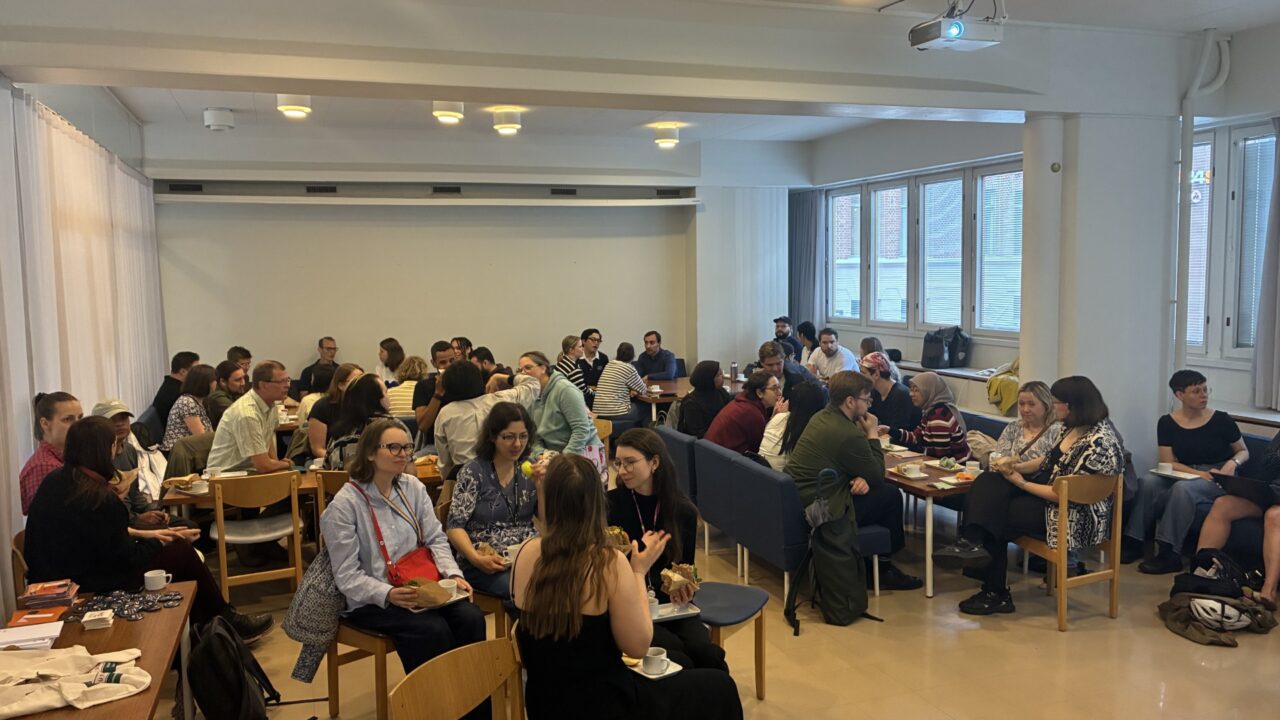
Over coffee and breakfast
We started bright and early, with coffee, breakfast and conversation. Before we’d even begun, people were telling us they felt “seen”, just by being invited to talk about their working lives.
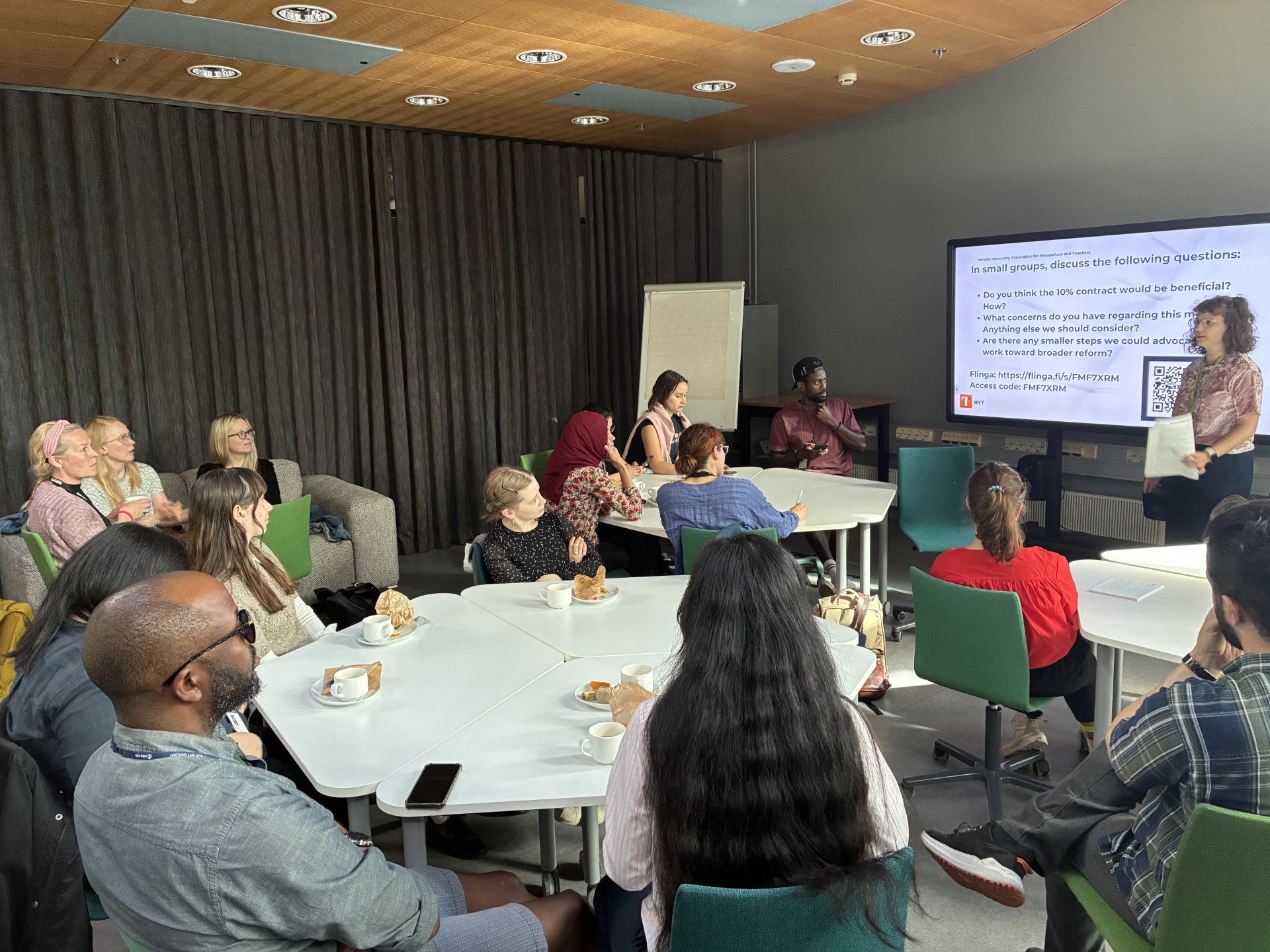
Then we opened up the discussion. Here’s what we heard.
Healthcare that works
Without occupational healthcare, grant researchers rely on the public system, where getting non-urgent care can be slow and hard to navigate. That delays treatment and, often, their research. Under the University’s agreement with Mehiläinen, a 10% contract would give full access to occupational healthcare, including doctors, work psychologists and physiotherapists.
“Getting help with anything non-urgent, such as an ADHD diagnosis and treatment, is very difficult if not impossible in public healthcare. This has gravely affected my ability to work.”
Last in the queue
Grant researchers want to teach, supervise and train, but they’re last in line for University pedagogy or language courses, even behind doctoral researchers. Some had been turned away simply because they’re on a grant.
“As an employee I could also access the university pedagogy courses without being the last one in the priority queue.”
Feeling like ‘a random freelancer’
Many grant researchers told us they feel cut off from the University community. Often they don’t get a shared workspace, keys to the building, or even invitations to department events, because the department doesn’t employ them. International researchers feel this most.
Belonging isn’t a luxury. Working alongside colleagues is how professional relationships, collaborations and careers grow.
“My main reason for requesting a workspace had been social/professional: to participate more fully in departmental life. In a field such as History, where there are very few international researchers, physical distance from where everyday academic interaction takes place can have a real effect on professional relationships and belonging.”
Locked out of the systems
Grant researchers can’t access the University’s SAP system. That means they can’t log working hours, claim travel expenses, manage project funds or hire trainees. For senior researchers leading their own projects, this is a daily roadblock, and time spent working around it is time taken away from research.
“I need access to the SAP system as an externally funded project leader. I have several grant-based researchers and some budget for other costs that are managed through the University accounts. I always need to ask favours from employed colleagues for help, which complicates things for my project management.”
Security between grants
Grant funding is precarious. It’s common to move between grants or move in and out of salaried positions. Moving between grants can leave people stranded and a more formal relationship with the University would give them security.
“I got a University laptop while employed, but my access rights to the system were cut when I switched to a grant. Now I do not have access to my project working files, delaying my graduation by 6 months.”
Teaching and supervision
At other Finnish universities, the 10% contract runs for at least 12 months and covers around 161 working hours a year. Many people saw that as a welcome bit of stability, though it also raised a fair question: what would those hours involve? The majority of grant researchers said they would really welcome the opportunity to teach and supervise, as it would improve their career prospects. But it wouldn’t be for everyone and there were some concerns over workloads. It would be important that this contract arrangement would be optional for grant researchers.
What comes next
Grant researchers left our breakfasts feeling “heard” and “seen”. Now we want the University to hear them too.
Grant researchers bring funding, publications, international collaborations and reputation to the University. In return, they deserve the same basic support as their colleagues: opportunities to teach, training, healthcare, a place to work and a place in the community.
On Monday 7th December, we’re launching our campaign at Think Corner, 17.00–18.30.
Grant researchers will share their stories and set out the changes we want to see. Everyone is welcome, and we’d love you to be there.
Vinaya Venkat, HYT Grant Researcher Working Group
Editor: Michael Pugh, HYT Communications and Advocacy Specialist