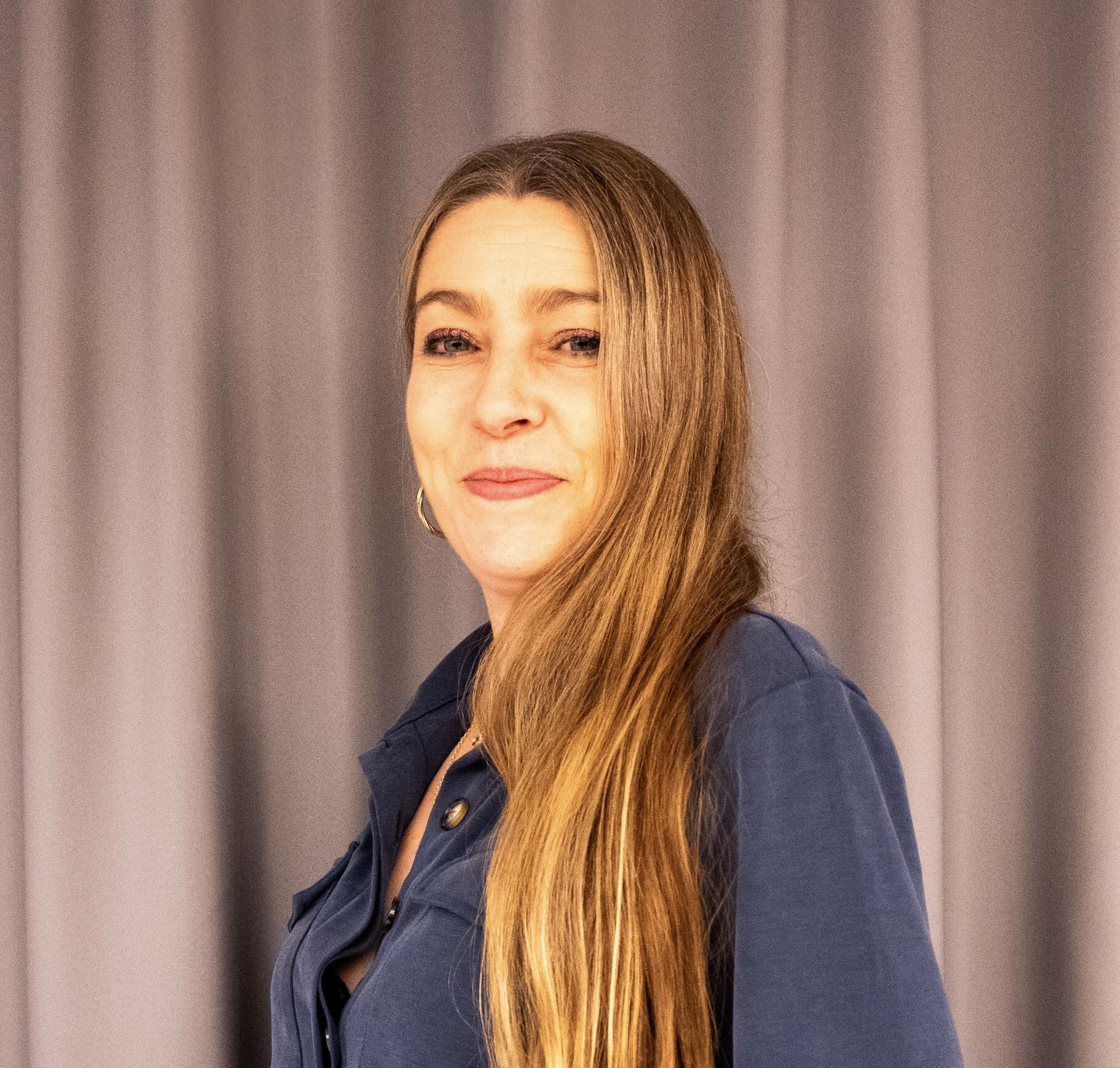
 Gwenaëlle Bauvois, HUART Board Member & HUART Advocacy Working Group
 Gwenaëlle Bauvois, HUART Board Member & HUART Advocacy Working Group
Vappu isn’t just a Finnish celebration. 1st May is known around the world as International Workers Day. To celebrate the diversity of our international membership, we asked our international members to share the importance of joining a union in Finland and how unions in Finland compared to our ‘home countries’ – but in our mother tongues. We have created a selection of blogs in a variety of languages.
You can read Gwen’s story in French. Scroll down for the English translation.
S’engager comme chercheur : parcours d’une syndicalisation
Je n’ai jamais vraiment séparé mon travail de ce que je vois autour de moi, ni de ce que je vis en tant que chercheuse en sociologie et citoyenne. Très tôt, j’ai compris que travailler dans le champ de la recherche, c’était aussi être confronté à des réalités sociales très concrètes, et au poids des capitaux sociaux, culturels et symboliques, souvent invisibles mais profondément structurants.
Dans mon quotidien, la question syndicale est apparue non pas comme une idée abstraite, mais comme une lecture possible de réalités sociales : précarité des chercheurs, dépendance aux contrats courts, instabilité permanente, et vulnérabilité accrue pour celles et ceux qui viennent de l’étranger. M’engager au sein de Tieteentekijät (Syndicat des chercheurs enseignants universitaires de l’Université d’helsinki) s’est donc tout naturellement imposé à moi.
La précarité du monde académique vécue de l’intérieur
Dans le milieu de la recherche, la précarité n’est pas marginale : elle structure largement les trajectoires professionnelles. Contrats à durée déterminée, financements incertains, renouvellements dépendants de logiques institutionnelles parfois opaques font partie du fonctionnement ordinaire.
En tant que chercheur étranger, cette précarité est renforcée par des dimensions spécifiques : contraintes administratives, dépendance aux statuts de séjour, adaptation permanente à des systèmes complexes, isolement… Même pleinement intégré dans les équipes, une forme d’extériorité institutionnelle demeure, discrète mais persistante.
Cette extériorité pèse sur la manière de se projeter, de construire une continuité professionnelle, d’obtenir des postes et parfois sur le sentiment même de légitimité.
Un héritage familial et une histoire sociale
Je suis française, originaire du Nord–Pas-de-Calais, une région marquée par une forte histoire ouvrière. J’ai grandi dans un environnement où le travail et les questions sociales occupaient – et occupent toujours – toujours une place centrale.
Mon père a travaillé en usine. Mon grand-père à la mine. Cette expérience a profondément influencé ma manière de comprendre le monde social. J’ai vu la pénibilité, les inégalités, le déterminisme mais aussi la dignité du travail et l’importance de la solidarité face aux conditions difficiles.
Dans cet univers, les pratiques syndicales font partie du réel : elles structurent les discussions, les rapports de force et les formes de protection collective.
Entre sociologie et expérience vécue
En tant que sociologue, j’analyse les dynamiques sociales, mais je les traverse aussi. Cette position rend particulièrement visibles les mécanismes de précarisation à l’œuvre dans le monde académique.
La précarité n’est pas une somme d’expériences individuelles : elle est produite par des structures, des institutions et des choix organisationnels. Elle s’inscrit dans des rapports sociaux plus larges.
Le syndicalisme est une manière de répondre à ces réalités : non pas en théorie, mais dans le concret des situations professionnelles. Il permet de rendre visibles des expériences souvent dispersées, parfois tues.
Il offre aussi un cadre pour transformer des situations individuelles en enjeux collectifs, et pour rappeler que les conditions de travail ne sont jamais secondaires. C’est également une manière de rester attentif aux transformations du monde académique dans son ensemble : réformes, statuts, et effets très concrets sur les trajectoires des personnes.
Une continuité entre héritage, recherche et engagement
Aujourd’hui, cet engagement s’inscrit pleinement dans ma pratique de chercheuse. Il prolonge ce que mes recherches m’apprennent sur les formes contemporaines d’exclusion et d’inégalité.
Il met en relation une histoire personnelle et sociale, un héritage familial et une expérience professionnelle. Pour moi, il s’agit de ne pas dissocier l’analyse des conditions dans lesquelles la recherche est produite, ni de considérer notre précarité comme une norme silencieuse du monde académique.
Becoming an engaged researcher: the path to unionisation
I have never really separated my work from what I see around me, nor from what I experience as a sociology researcher and citizen. Very early on, I understood that working in the field of research also meant being confronted with very concrete social realities, and with the weight of social, cultural and symbolic capital, often invisible but profoundly structuring.
In my daily life, the issue of unions appeared not as an abstract idea, but as a possible interpretation of social realities: the precariousness of researchers, dependence on short-term contracts, constant instability, and increased vulnerability for those who come from abroad. Getting involved with Tieteentekijät (the Union of University Research Professors at the University of Helsinki) was therefore a natural step for me.
The precariousness of the academic world as experienced from within
In the research community, job insecurity is not marginal: it largely structures career paths. Fixed-term contracts, renewals dependent on sometimes opaque institutional logics, uncertain funding, are part of the ordinary way of working.
As a foreign researcher, this precariousness is reinforced by specific dimensions: administrative constraints, dependence on residency status, constant adaptation to complex systems, isolation… Even when fully integrated into teams, a form of institutional externality remains, discreet but persistent.
This externality weighs on the way one plans for the future, builds professional continuity, obtains positions and sometimes on the very feeling of legitimacy.
A family legacy and a social history
I am French, originally from Nord-Pas-de-Calais, a region marked by a strong working-class history. I grew up in an environment where work and social issues occupied – and still occupy – a central place.
My father worked in a factory. My grandfather in a mine. This experience profoundly influenced my understanding of the social world. I saw the hardship, the inequalities, the social determinism, but also the dignity of work and the importance of solidarity in the face of difficult conditions.
In this world, union practices are part of reality: they structure discussions, power dynamics, and forms of collective protection.
Between sociology and lived experience
As a sociologist, I analyze social dynamics, but I also experience them. This position makes the mechanisms of precarity at work in the academic world particularly visible.
Precarity is not a sum of individual experiences: it is produced by structures, institutions and organizational choices. It is part of broader social relations.
Trade unionism is a way of responding to these realities: not in theory, but in the concrete reality of professional situations. It allows for the visibility of experiences that are often scattered, sometimes silenced.
It also provides a framework for transforming individual situations into collective issues, and for reminding us that working conditions are never secondary. It is also a way to remain attentive to the transformations of the academic world as a whole: reforms, statutes, and very concrete effects on individuals’ career paths.
A continuity between heritage, research and commitment
Today, this commitment is fully integrated into my research practice. It extends what my research teaches me about contemporary forms of exclusion and inequality.
It connects a personal and social history, a family heritage, and a professional experience. For me, it is important not to separate the analysis from the conditions in which the research is produced, nor to consider our precariousness as an unspoken norm of the academic world.