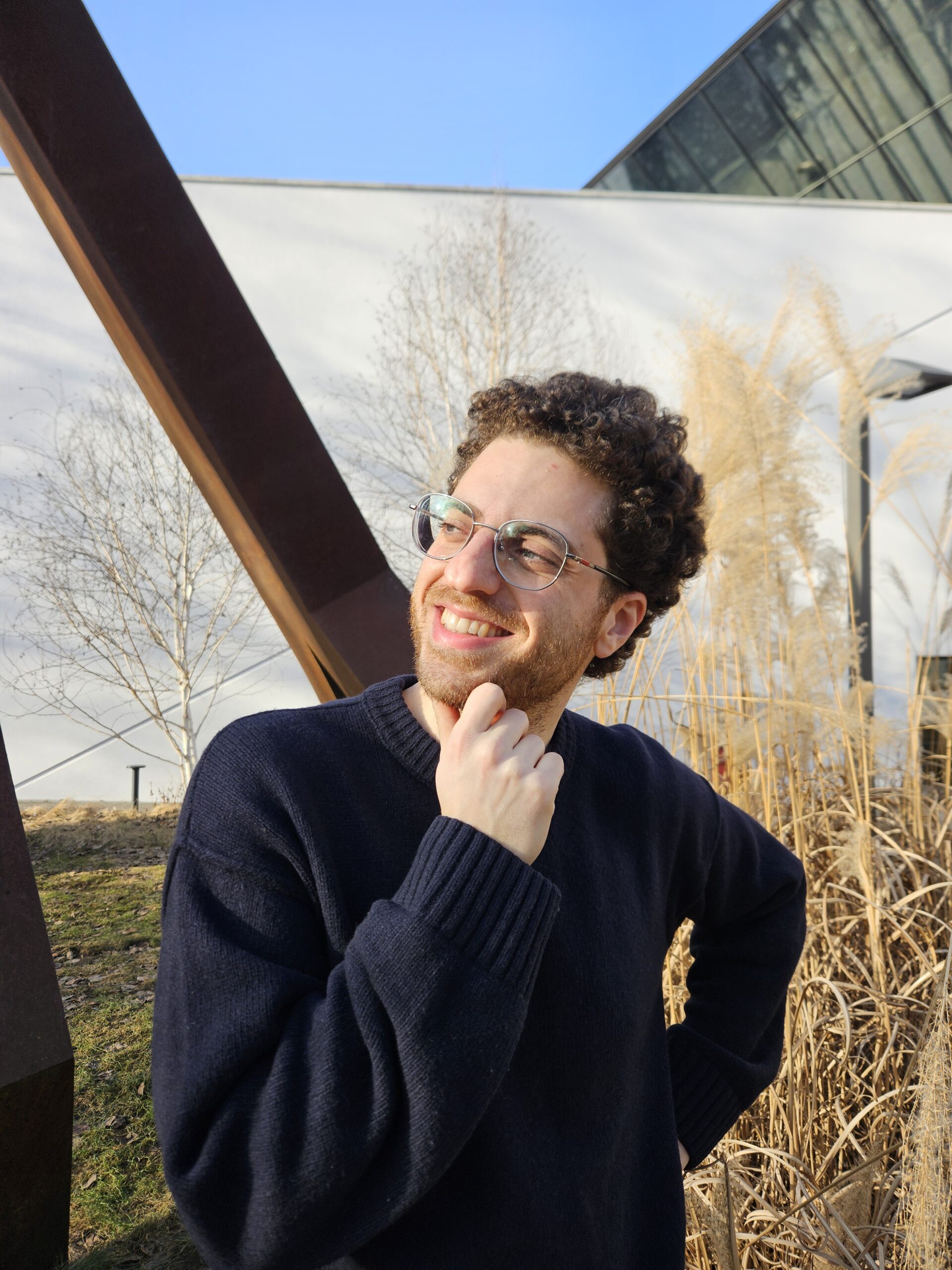
 Mattia Retta, HUART Member & Doctoral Researcher
 Mattia Retta, HUART Member & Doctoral Researcher
Vappu isn’t just a Finnish celebration. 1st May is known around the world as International Workers Day. To celebrate the diversity of our international membership, we asked our international members to share the importance of joining a union in Finland and how unions in Finland compared to our ’home countries’ – but in our mother tongues. We have created a selection of blogs in a variety of languages.
You can read Mattia’s story in Italian. Scroll down for the English translation.
The University is us: finding community in unionism
La mia esperienza da ricercatore straniero in Finlandia è sicuramente differente da quella di molti, perché in realtà, straniero, non mi sento più ormai da tanti anni. Mi sono trasferito in Finlandia nel 2012 dopo una prima laurea triennale in lingue all’Università di Torino. Nel 2013 ho cominciato un’altra triennale proprio all’Università di Helsinki, e da quel momento in poi questo ateneo è diventato casa mia. Dopo la magistrale, ho cominciato il percorso del dottorato, che con ogni probabilità terminerá tra qualche mese (si spera, con un cappello e una spada in più). Helsinki e la Finlandia sono la mia seconda casa, e anche la lingua finlandese mi è entrata così dentro la pelle che qualche volta la preferisco addirittura al mio amato italiano.
La lunga storia dei sindacati italiani
La premessa era necessaria per spiegare, per esempio, come il mio rapporto con i sindacati in Italia sia solamente teorico, dal momento che la mia intera carriera professionale si è svolta, per il momento, qui in Finlandia.
Fin da piccolo, tuttavia, mi ricordo del telegiornale all’ora di pranzo e cena e di queste sigle misteriose che sentivo ogni giorno: CGIL, CISL, UIL, e tante altre. Da buon torinese, figlio e nipote di operai della Fiat, ben presto mi sono reso conto che il punto centrale dei sindacati era uno: utilizzare la forza del collettivo per proteggere i diritti dell’individuo. E di esempi simili ne abbiamo anche nella storia recente, per esempio con le grandi proteste del 2025 contro il genocidio in Palestina (la più famosa, forse, quella del porto di Genova), coordinate proprio dai principali sindacati italiani.
La mia esperienza con HYT – trovare una comunità
Molti dei miei colleghi che hanno scritto su questo blog hanno sottolineato l’importanza del sindacato nel navigare la vita lavorativa accademica, con tutte le sue incertezze e ostacoli, in un contesto nuovo come quello finlandese. Pur riconoscendo l’importanza di questo aspetto, quello che cercavo io era altro: era un senso di comunità tra persone che condividono un progetto di vita simile.
Questo senso di comunità l’ho ritrovato nella mia partecipazione a Researchers for Palestine, un gruppo di professori e ricercatori dell’Università di Helsinki impegnati a promuovere un boicottaggio accademico delle istituzioni statali israeliane, e nel lavoro congiunto tra il nostro movimento e HYT. Fin da subito, questo sindacato ha sostenuto e promosso attivamente il boicottaggio accademico di Israele e il suo consiglio direttivo costituisce probabilmente la piattaforma più attiva per rafforzare la solidarietà con la Palestina e la solidarietà internazionale all’interno dei sindacati finlandesi.
Perché scegliere un sindacato da dottorando
Sebbene i costi non siano certamente proibitivi, spesso ci si può chiedere quanto veramente convenga iscriversi a un sindacato accademico da dottorandi, visto che non si è neanche certi necessariamente di voler continuare la carriera in questo mondo. Sono profondamente convinto, però, che la vulnerabilità contrattuale dei dottorandi e dei post-doc possa essere controbilanciata dall’azione dei sindacati, che devono sia garantire trasparenza e trattamenti equi, sia promuovere la collaborazione e il senso di comunità e di appartenenza tra i propri membri.
Una speranza per il futuro
Dal punto di vista puramente lavorativo, sarebbe assolutamente impossibile lamentarsi dell’operato del sindacato. Giusto per fare un esempio, l’anno scorso l’unione dei sindacati finlandesi ha raggiunto un accordo con i datori di lavoro e ottenuto un aumento salariale del 7,8% per il periodo 2026-2028.
Quello che mi piacerebbe vedere è una maggiore unità e forza nel contrastare le terribili politiche governative che stanno distruggendo, anno dopo anno, la competitività e la qualità dell’istruzione finlandese (e non solo a livello universitario). A volte ho l’impressione che sia noi, come personale, sia i sindacati come istituzioni, finiamo per accettare le decisioni calate dall’alto con rassegnazione e sconforto, senza mai sviluppare una vera strategia per opporvisi.
Ecco, la mia speranza per il futuro è che tutti insieme possiamo remare verso un’unica direzione, anche quando farlo è scomodo o rischioso (ed è proprio nel diminuire questi rischi per il personale che risiede l’importanza cruciale del sindacato). Senza dimenticare una cosa fondamentale: insieme con gli studenti, siamo noi a fare l’università.
The University is us: finding community in unionism
My experience as a foreign researcher in Finland is certainly different from that of many others, because in truth, I have not really felt like a foreigner for many years now. I moved to Finland in 2012 after completing a first bachelor’s degree in languages at the University of Turin. In 2013, I began another bachelor’s degree at the University of Helsinki, and from that moment on, this university became my home. After my master’s degree, I started my current doctoral journey, which will most likely come to an end in a few months (hopefully with an extra hat and sword to show for it). Helsinki and Finland are my second home, and even the Finnish language has become so deeply a part of me that sometimes I even prefer it to my beloved Italian.
The Long History of Italian Trade Unions
This introduction was necessary to explain, for example, why my relationship with trade unions in Italy is mostly theoretical, since my entire professional career has, so far, taken place here in Finland.
Even so, I vividly remember growing up in Italy with the lunchtime and evening news constantly mentioning these mysterious acronyms: CGIL, CISL, UIL, and many others. As someone from Turin, and the son and grandson of Fiat factory workers, I soon understood the core principle of trade unions: using the strength of the collective to protect the rights of the individual. We can still see similar examples in recent history, such as the massive 2025 protests against the genocide in Palestine (perhaps most famously the protest at the Port of Genoa), coordinated precisely by the major Italian trade unions.
My Experience with HYT – Finding a Community
Many of my colleagues who have written on this blog have highlighted the importance of trade unions in navigating academic working life, with all its uncertainties and obstacles, especially in a new context such as Finland. While I fully recognize the importance of this aspect, what I was personally looking for was something else: a sense of community among people who share similar life projects.
I found that sense of community through my involvement in Researchers for Palestine, a group of teachers and researchers at the University of Helsinki committed to promoting an academic boycott of Israeli state institutions, and through the collaboration between our movement and HYT. From the very beginning, this union actively supported and promoted the academic boycott of Israel, and its executive board is probably one of the most active platforms for strengthening solidarity with Palestine and international solidarity within Finnish trade unions.
Why Join a Trade Union as a Doctoral Researcher
Although the costs are certainly not prohibitive, many doctoral researchers understandably wonder whether joining an academic trade union is really worthwhile, especially when one may not even be sure about continuing an academic career in the future. Nevertheless, I strongly believe that the contractual vulnerability of doctoral researchers and postdocs can be counterbalanced by the work of trade unions, which must both guarantee transparency and fair treatment and foster collaboration, community, and a sense of belonging among their members.
A hope for the future
From a purely work-related perspective, it would be difficult to complain about the union’s job. Just to give one example, last year the Finnish trade union federation reached an agreement with employers and secured a 7.8% salary increase for the 2026–2028 period.
What I would really like to see, however, is greater unity and a stronger stance in opposing the terrible government policies that are undermining, year after year, the competitiveness and quality of Finnish education, not only at the university level. Sometimes I feel that both we as staff members and the unions as institutions end up accepting top-down decisions with resignation and discouragement, but without developing a real strategy to resist them.
My hope for the future is that everyone can row in the same direction, even when doing so is uncomfortable or risky — and reducing those risks for staff is precisely where the crucial importance of trade unions lies. Without forgetting one fundamental thing: together with the students, the university is made by us.